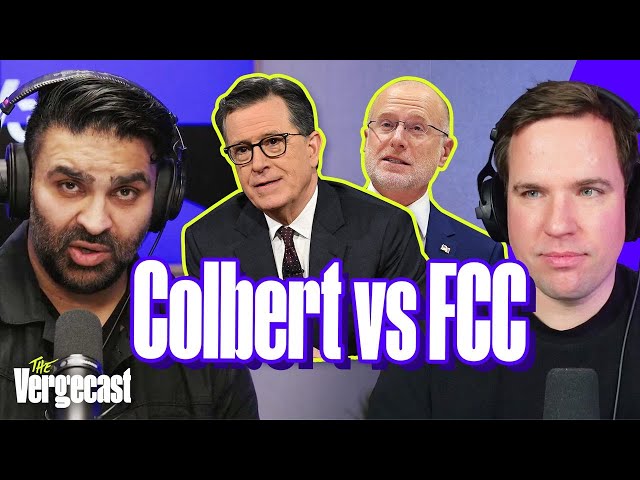
The phrase “the speech police came for Colbert” reflects a growing debate about free expression and accountability in modern media, especially when it comes to political comedy. Stephen Colbert, known for his sharp satire and bold commentary, often finds himself at the center of controversy when jokes or opinions spark strong reactions online. Supporters argue that his style is part of a long tradition of comedians challenging power through humor, while critics believe certain lines shouldn’t be crossed in today’s sensitive media environment.
In recent years, audiences have become more vocal and influential, largely because of social media platforms where clips spread instantly and reactions escalate quickly. This shift has given rise to what some call “speech policing,” a form of collective pressure aimed at calling out language or ideas perceived as offensive or harmful. For some viewers, this represents progress toward more respectful public discourse. Others, however, see it as a threat to creativity, suggesting that comedians may begin to self-censor out of fear of backlash.
Colbert’s situation highlights a larger cultural tension between artistic freedom and social responsibility. Political satire has always pushed boundaries, but the digital age amplifies every moment, turning individual jokes into global conversations within hours. The real question isn’t just about one host or one show — it’s about how society defines acceptable humor in an era where audiences are more connected and outspoken than ever.
Ultimately, the debate surrounding Colbert shows how media culture is evolving. Balancing free speech with accountability remains a complex challenge, and the conversation itself may be a sign of a healthy, if sometimes heated, democratic dialogue.
In recent years, audiences have become more vocal and influential, largely because of social media platforms where clips spread instantly and reactions escalate quickly. This shift has given rise to what some call “speech policing,” a form of collective pressure aimed at calling out language or ideas perceived as offensive or harmful. For some viewers, this represents progress toward more respectful public discourse. Others, however, see it as a threat to creativity, suggesting that comedians may begin to self-censor out of fear of backlash.
Colbert’s situation highlights a larger cultural tension between artistic freedom and social responsibility. Political satire has always pushed boundaries, but the digital age amplifies every moment, turning individual jokes into global conversations within hours. The real question isn’t just about one host or one show — it’s about how society defines acceptable humor in an era where audiences are more connected and outspoken than ever.
Ultimately, the debate surrounding Colbert shows how media culture is evolving. Balancing free speech with accountability remains a complex challenge, and the conversation itself may be a sign of a healthy, if sometimes heated, democratic dialogue.

Be the first to comment
Up Next
Autoplay
-
05:43

Watch Samsung CEO BK Yoon's CES 2015 keynote speech in under six minutes
-
05:10
How police manipulate facial recognition
-
1:19:37
#From10ToInfinity: Xiaomi 10th Anniversary Public Speech
-
03:06
Futuristic Police Car -- Loaded With Tech (CES 2013)
-
10:02
PCMag Live 01/17/14: Obama's NSA Speech & Google Contact Lens
-
01:31
CBS reportedly eyes Colbert as Letterman announces retirement: 90 Seconds on The Verge
-
22:57
I Hired A Speech Therapist To Fix My Boring Voice
-
08:13
Recording police brutality: how one snap decision changed this town
-
04:38
Squadron 42 Admiral Bishop Senate Speech by Gary Oldman
-
15:43
My Surprise Wedding Speech
-
08:38

Review of the Dell XPS 15 OLED: Near-Perfect
-
11:05

OnePlus Watch Review: They Found a Solution!
-
06:45

BlackBerry Motion vs KEYone: Buttons Make The BlackBerry
-
12:24
in 12 minutes Apple September 2020 event
-
11:54

Double troubles: Microsoft Surface Duo review:
-
13:18

An extravagant success Galaxy Z Fold 2 review
-
02:07

Sony Xperia Z1S & Z1 Compact at CES 2014!
-
09:24

Impressions: Nostalgia Reloaded Moto RAZR 2
-
10:07

Apollo is Back - My Tesla Repair Process!
-
11:30

Best Value Phone of 2020 Poco X3 NFC Review(so far...)