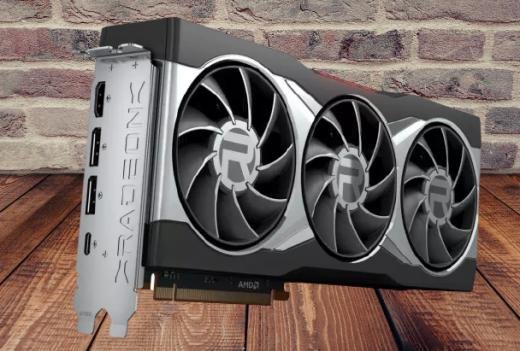
AMD's most up to date designs cards: RDNA2 power from $579 to $999
Estimating is a hodgepodge—we hope to see value cuts on the low-end RX 6800 soon.
Today, AMD dispatched the first of its "Enormous Navi" RDNA 2 design Radeon illustrations cards, the RX 6800 XT and RX 6900 XT. These cards contend legitimately against Nvidia's RTX 3070, RTX 3080, and RTX 3090.
Like Nvidia's RTX 3000 line, the new cards offer 60+ fps 4K gaming, with full DirectX 12 Ultimate help, including equipment quickened continuous beam following.


Highlights
The greatest expansion to the Radeon stockpile with RDNA 2 is ongoing beam following and backing for DirectX 12 Ultimate. The new cards highlight one Ray Accelerator for each Compute Unit on the card, offering a generally ten times increment in beam following execution contrasted with programming just usage.


Somehow or another, AMD appears as though it may have gotten caught off guard on the RX 6800 estimating. Customers will most likely struggle supporting an extra $80 at that value section on a card with higher thermals and a more questionable constant beam following family. Be that as it may, in different ways, AMD may have the edge—if higher measures of VRAM in each class are your selling point. The RX 6800's 16GB of GDDR6 VRAM copies that of Nvidia's practically identical RTX 3070.
The offer is nearer to in any event, when moving up to the 6800XT and pretty much overpowering at the top level. That is the place where Nvidia's RTX 3090 costs an astounding 50% more than AMD's RX 6900 XT for generally a similar 4K outline rates conveyed. Both of these AMD cards sport 16GB of GDDR6 VRAM, too, yet that is not timed as profoundly as Nvidia's decision of GDDR6X VRAM (11GB of it in the RTX 3080, and 24GB in the RTX 3090).
On the off chance that all you're searching for is the best crude 4K outline rates on flow AAA games, beam following be cursed, the top finish of the RX 6000 arrangement seem like clear victors. For anybody vigorously put resources into beam following, staying with Nvidia—who put up it for sale to the public an age sooner—may be the better wagered in the event that you can hardly wait a couple of months to perceive how those highlights and their exhibition shake out on the lookout.
This article has been refreshed with more data about VRAM limit in AMD's freshest GPUs.